Showcased Works
- Eye-Poems
My initial foray into expanded poetry was through the creation of eye-poems. These works, composed of irregular lines, are focused on capturing specific scenes and objects, aiming to evoke the presence of something tangible in a particular moment. The sense of vision was central to this exploration of expanded poetic form.
- Eye-Poem 1: Set in New Haven Green, this poem captures an everyday scene where a smashed fruit lies on the ground among joggers and passersby. The poem’s pivotal moment features a seed that gleams within the fruit, only to be suddenly pecked. The Portuguese verb “bicada” adds a layer of complexity, as it can mean both “kicked by someone” and “beaked by a bird,” leaving the image open to interpretation.
- Eye-Poem 2: This piece is rooted in a memory of mine, depicting a forest fire spreading across a hill during an orange sunset, resembling a golden hat.
2. Dialogic Poems Inspired by Comic Books
This series of works draws inspiration from the techniques found in comic books and serial literature, particularly René Magritte’s painting The Lovers. The romantic yet disconnected imagery of the veiled kiss is reimagined in pairs of dialogues. One lover expresses a romantic idea, while the other responds with a disagreement, weaving references to historical events, music, and art, as well as iconic works like Shakespeare’s Romeo and Juliet and Fernando Pessoa’s Eros and Psiquê.
3. Infra-Reading: “Jaque Mate” by Augusto de Campos
This experiment revisits Augusto de Campos’ poem “Jaque Mate,” originally shaped like a chess piece. My infra-reading technique starts at the poem’s end, working backward step by step. This approach emphasizes the inseparability of a poem from its material form, highlighting how the message and its rendering are intrinsically linked.
4. O Pequeno Criado (The Little Servant)
In this piece, line breaks are used to create a dual meaning between a “criado” (an enslaved person) waiting by the bed and a “criado-mudo” (a bedside table). The original poem is presented in Portuguese with a black background, accompanied by a photograph. An English translation explores the polysemy of the original, followed by a simplified version that loses much of the cultural nuance, underscoring the losses inherent in translation.
5. Verbivocovisual Poem: The Persistence of Verse
This poem examines the persistence of verse as the foundation of poetic creation, even amid avant-garde movements like the metaverse. The term “verse” pulsates rhythmically within the poem, symbolizing its enduring presence. The poem concludes when the rhythm dissipates, giving way to prose.
6. 3D Object Poem: The Verse Roulette
This three-dimensional object poem is a customized hand spin casino roulette. The still center represents the verse, while the moving edges symbolize the experimental approaches that alter verse within different poetic regimes. Although participants can spin the roulette, the verse remains steadfast at the core, highlighting the permanence of verse.
7. Gambling and Permanence in Poetry
Building on the concept of chance, this poem draws inspiration from Stephane Mallarmé’s Un coup de Dés jamais n’abolira le hasard, a foundational modern poem that expanded the boundaries of poetic language through typography. The work reinterprets Mallarmé’s exploration of chance within the poetic form.
8. Poemeasure: A Tool for Measuring the Poetic
Finally, I present poemeasure, a conceptual tool that replaces numerical measurements with letters to gauge the poetic. Its interpretation is left open-ended, inviting reflection on what it means to measure the poetic.
Acknowledgments
I extend my gratitude to Professor Patrícia Lino for encouraging me to navigate the intersections of research, criticism, and creative writing. I also thank you for your attention and hope you find resonance in these works.
About the Artist
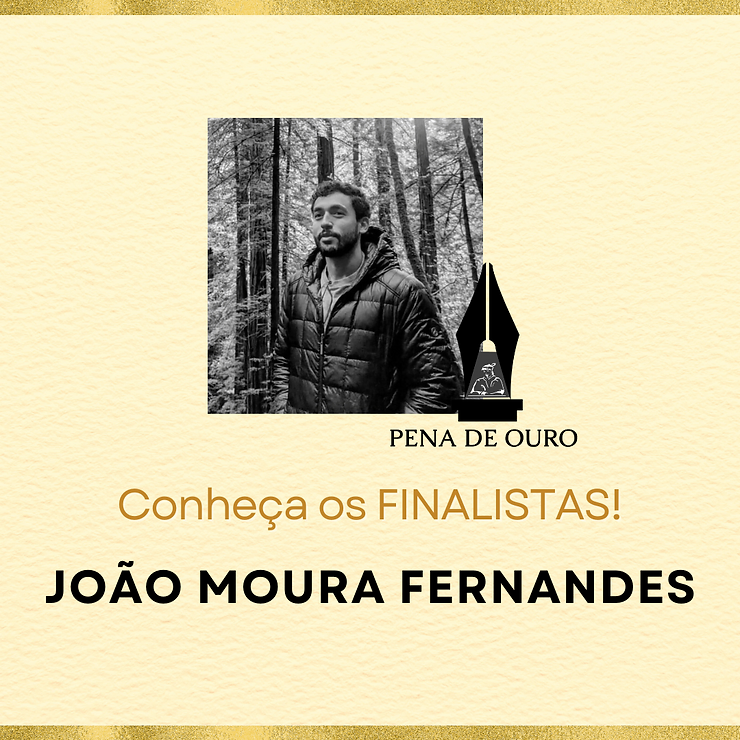
João Moura Fernandes is a Brazilian poet currently pursuing his Ph.D. at the State University of Rio de Janeiro and working as a Visiting Assistant in Research at Yale University. His research delves into the poetic forms and rhythms found in modern and contemporary poetry. The Expanded Brazilian Poetry course by Professor Patrícia Lino has been instrumental in broadening his perspectives and influencing his creative process.